Twilio Segment Unify
Get a complete view of your customer
Unify brings together streaming data from all sources, including the data warehouse, for rich profiles that create real-time 1:1 personalized experiences at scale.
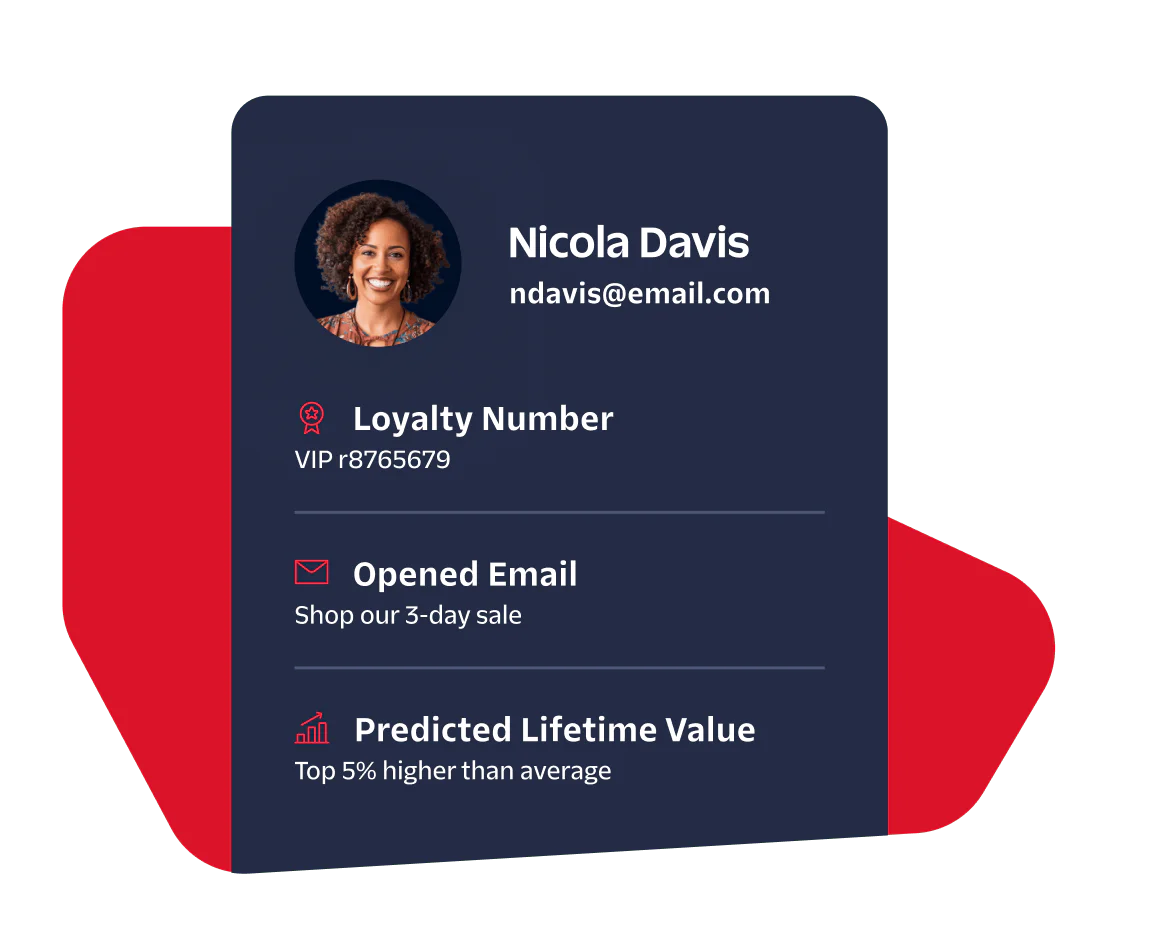
How Twilio Segment Unify works
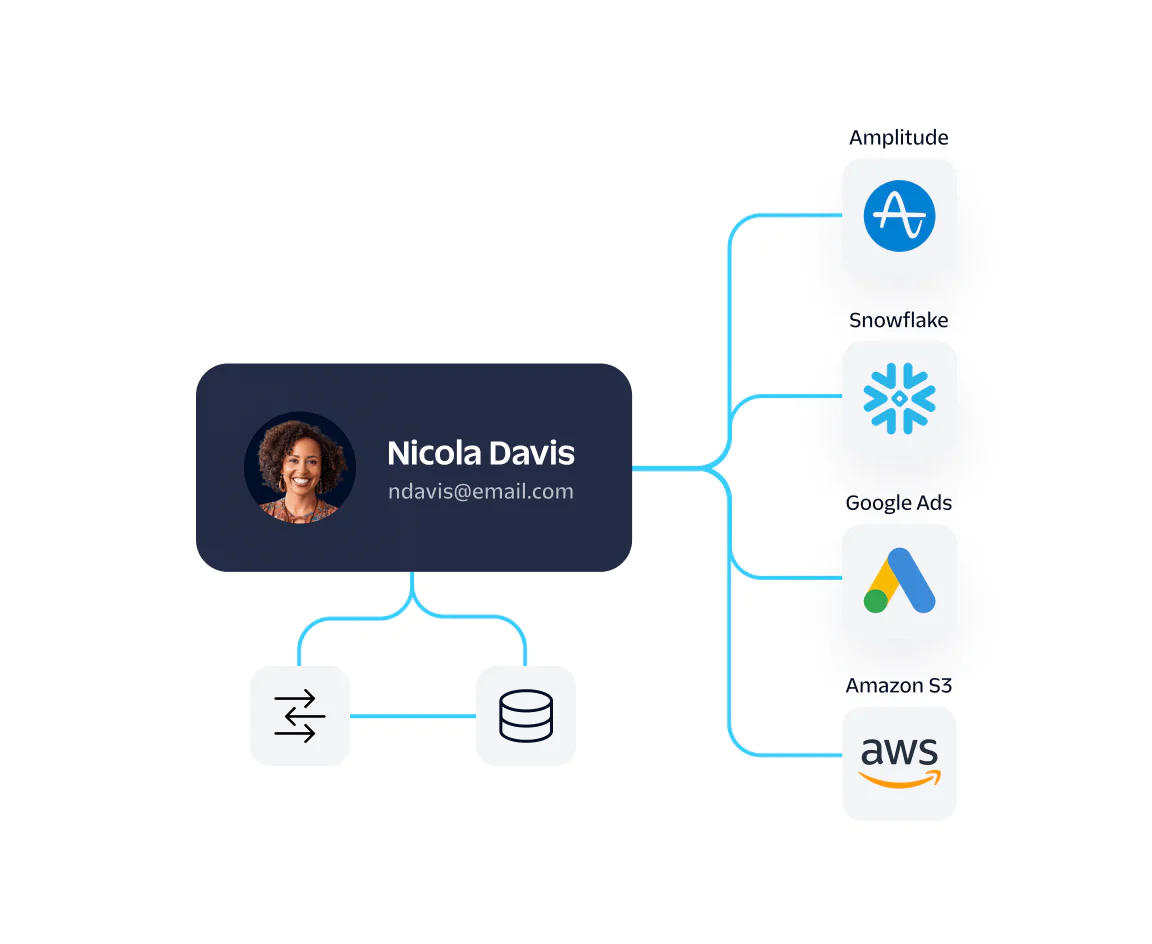
Segment Unify collects data from all your sources—including your data warehouse—and automatically matches and merges it to create unified, always up-to-date customer profiles.
With warehouse interoperability, Unify lets you both enrich profiles with data from your warehouse and send unified profiles back for advanced analysis. Instantly activate these Segment profiles across your favorite marketing, analytics, and customer engagement tools to deliver personalized experiences and power smarter business decisions at every touchpoint.
See how leading teams put Unify to work
From data silos to connected experiences—see what’s possible.
Unify features
Unify real-time customer data interactions with real-time customer behavior and data from your warehouse.
-
Merge customer traits and interactions across devices and channels into a single profile for each customer in real time.
-
Continuously sync identity-resolved profiles to your data warehouse, enriching them with data from CRM systems, support platforms, and other records.
-
Activate warehouse-enriched profiles by sending them from your data warehouse to over 550 downstream tools, including marketing platforms, analytics services, and customer support systems.
-
Segment Linked Audiences simplifies audience segmentation for B2B and B2C marketers, enhancing personalization by directly integrating with your data warehouse. Craft flexible segments with the audience builder tool to boost marketing effectiveness across various channels.
-
Programmatically query customer profiles in real time to build personalized experiences and empower sales and support teams with complete customer context.
-
Automatically augment unified customer profiles with real-time, AI-generated traits—like likelihood to convert or churn—for downstream use in personalization and automation.
One profile, endless possibilities
Unify every customer touchpoint into a single profile to power real-time personalization and smarter engagement.

Unify FAQs
Twilio Segment Unify pulls customer data from every source (including your warehouse) and matches it into a single, always-current profile per customer. Instead of one view in your CRM, another in support, and a third in analytics, you get one comprehensive profile that every team and tool can act on in real time.
Identity resolution stitches a customer's activity across devices, channels, and systems into one profile. Without it, the same person shows up as three different records, and your personalization guesses wrong. Twilio Segment Unify resolves those identifiers in real time, so you're talking to one customer.
Twilio Segment Connections collects your data and routes it, while Twilio Segment Unify turns that data into a single 360-degree view of each customer. Connections moves events to 700+ tools. Unify sits on top, matching those events into resolved customer profiles you can enrich, sync back to your warehouse, and activate. Teams typically add Unify once their data is already flowing.
Unify makes sense if customer data lives in silos that don't agree with each other. It's built for teams that need one trustworthy profile across sales, support, and marketing.
Once every touchpoint rolls into one profile, you can:
Personalize in real time: Activate profiles across marketing, analytics, sales, and support tools.
Enrich with predictions: Add AI-generated traits like likelihood to convert or churn.
Query on demand: Pull complete customer context through the Profile API.
Unify pricing depends on your Twilio Segment plan and data volume, so there's no flat rate. Our sales team can put together a quote built around your setup. Identity resolution and unified profiles come with Twilio Segment's CDP plans, and you can start free with Twilio Segment to test the platform first.